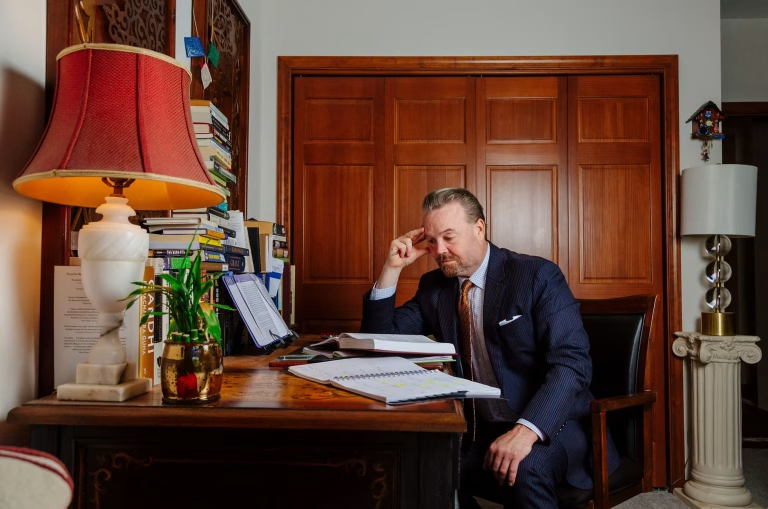
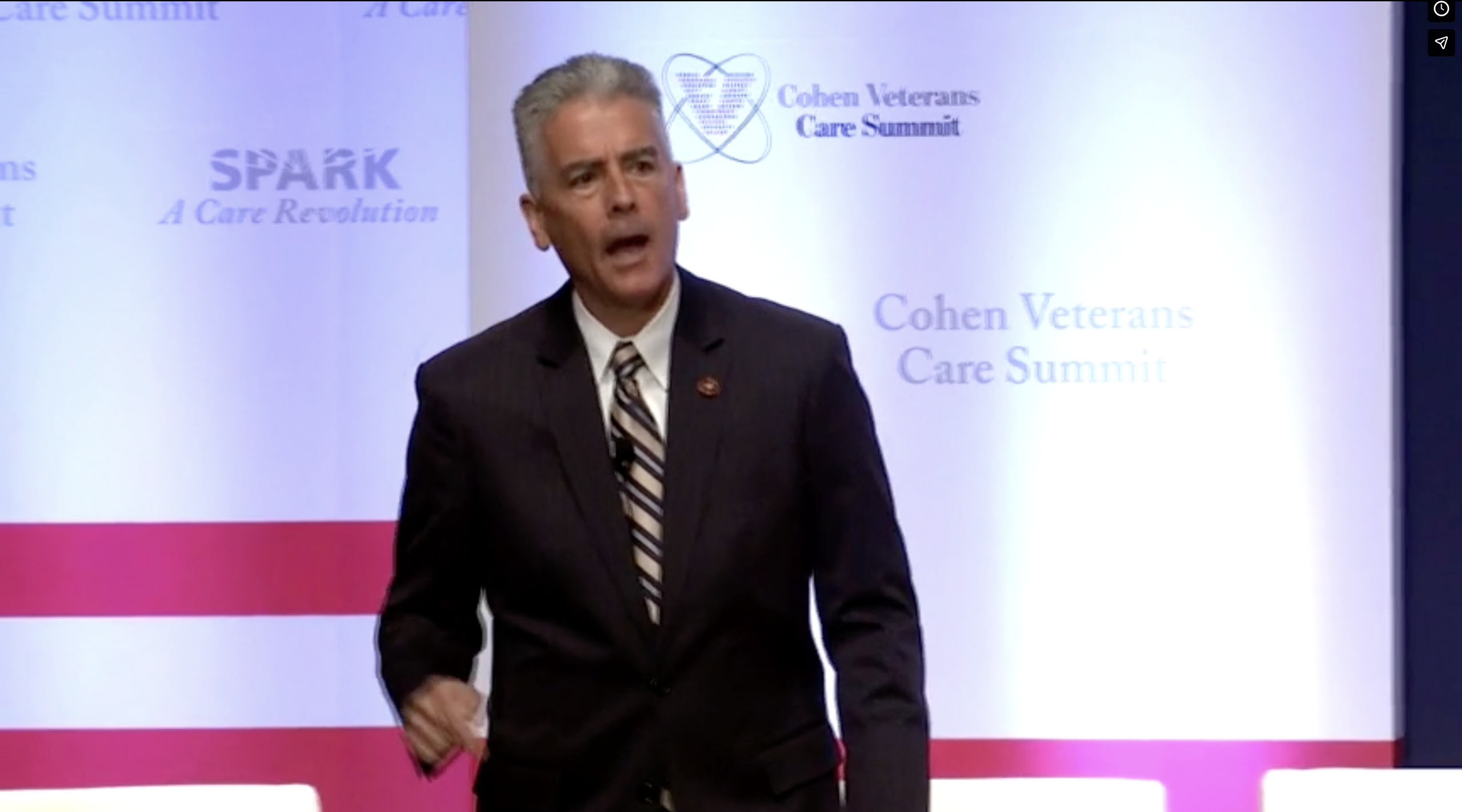
Some of the most serious injuries our service members carry home are the ones no one can see on the outside. Maher Legal Services recently hosted a gathering of neurosurgeons, neurologists, physicians, researchers, and veterans, brought together around a single, urgent question: how do we better diagnose and treat the brain injuries caused by blast exposure in combat.
The Problem: Interface Astroglial Scarring
The condition at the center of this work is known as Interface Astroglial Scarring, or IAS: a distinctive pattern of microscopic scarring in the brain associated with exposure to blast overpressure. It shows up in service members who have been exposed to explosions, breaching charges, artillery fire, and similar blast environments, often after repeated exposure over the course of a career rather than a single incident.
Because this scarring is microscopic, it does not show up on a standard scan and does not always announce itself with an obvious diagnosis. For many veterans, it has instead been mistaken for, or hidden behind, other conditions, leaving the underlying injury unaddressed. Understanding IAS, and building reliable ways to detect it, is a critical step toward getting veterans the care they actually need.
A Collaborative Effort
This work is being led by the Invisible Wounds Foundation, a Chicago-based national hub that brings together researchers, clinicians, government agencies, and funders working on military brain injury, with a particular focus on Special Operations Forces. The Foundation exists to accelerate how the medical community diagnoses and treats brain injury among service members and veterans, closing a gap that has too often left these injuries invisible.
Maher Legal Services is proud to have hosted the physicians and researchers working on this problem, alongside The Impossible Foundation, a nonprofit based in Bozeman, Montana dedicated to combating suicide among active-duty and veteran special operations warfighters, and a team of documentarian and filmmaking partners who have been capturing this effort on film. Together, this group is working to bring greater scientific rigor, and greater public attention, to a condition that affects far more veterans than most people realize, and one that is closely tied to the broader crisis The Impossible Foundation was founded to address.
Watch the Video
A short video, produced with our filmmaking partners, gives a sense of the people and the mission behind this work.
Why This Matters to Us
Maher Legal Services represents service members and veterans whose careers and futures have been shaped by their service, including many who carry the effects of blast exposure long after they leave the field. Supporting research that leads to earlier, more accurate diagnosis of injuries like IAS is part of the same commitment that drives our legal work: standing behind the people who have served, and helping ensure the systems meant to support them actually do.
We are grateful for the opportunity to support this effort and look forward to sharing more as the research moves forward.
To learn more about the Invisible Wounds Foundation and its work, visit invisiblewounds.org. To learn more about The Impossible Foundation, visit theimpossiblefoundation.org.