
How we can Help
Maher Legal Services focuses its practice in areas where military service, federal employment, and complex legal systems intersect. Select the area that best describes your situation.
SERVICE MEMBERS AND VETERANS
Military Justice and Courts-Martial Defense
If you are facing a court-martial, a military investigation, an adverse discharge, or a post-conviction appeal, Maher Legal Services has represented service members at every stage of the military justice process. Our attorneys have served as both prosecutors and defense counsel under the Uniform Code of Military Justice, and understand how these proceedings are built and how they can be challenged.
FEDERAL EMPLOYEES
Federal Employment Defense
If you have received a notice of proposed removal, a proposed demotion or suspension, or are involved in a Merit Systems Protection Board proceeding, the process ahead follows specific rules and timelines that matter. Maher Legal Services has represented federal employees from GS-12 through Senior Executive Service level across multiple agencies, and has worked inside federal agencies as counsel.
RESERVISTS, GUARD MEMBERS, AND FIRST RESPONDERS
USERRA: Military Employment Rights
Federal law requires civilian employers to protect the jobs, seniority, and benefits of employees who serve in the military. If your employer has denied your reemployment, reduced your pay or benefits, or created obstacles because of your service obligations, you may have a claim under the Uniformed Services Employment and Reemployment Rights Act. Maher Legal Services has litigated USERRA cases in federal court against police departments, fire departments, municipalities, and private employers.
FEDERAL EMPLOYEES AND CONTRACTORS IN NATIONAL SECURITY ROLES
Security Clearance Defense
A security clearance suspension or revocation can end a career in federal service or government contracting with little warning. Maher Legal Services represents individuals facing clearance reviews and adverse suitability determinations, navigating the administrative process that governs these decisions and advocating for clients whose livelihoods depend on maintaining access to classified information.
The Team. The Experience. The Connections.
We’ll Take Your Case As Far As Necessary.
We didn’t just serve in the military, we deployed overseas and know the ins and outs of today’s modern military justice system.
We uncover evidence few people can access by using today’s war-fighting technology, namely biometrics and top-tier professional investigators.
We know the key players, how to secure the witnesses, argue your case in court, and (if necessary) do a full-frontal media campaign. We’re doers, not talkers.
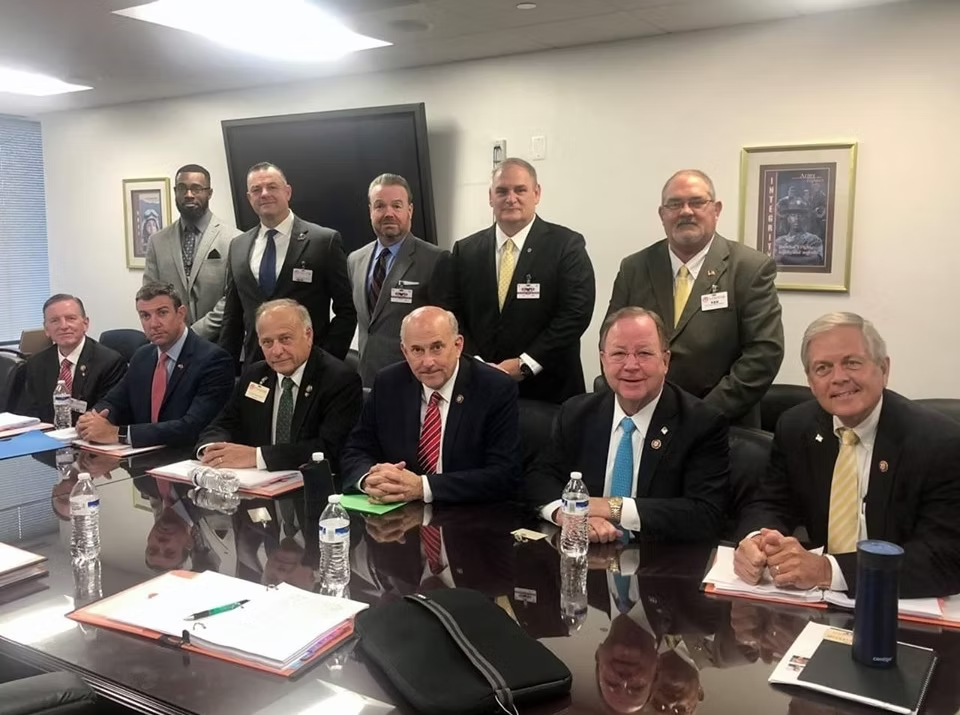
Dustin Heard, reunited with his family after years of unlawful imprisonment.
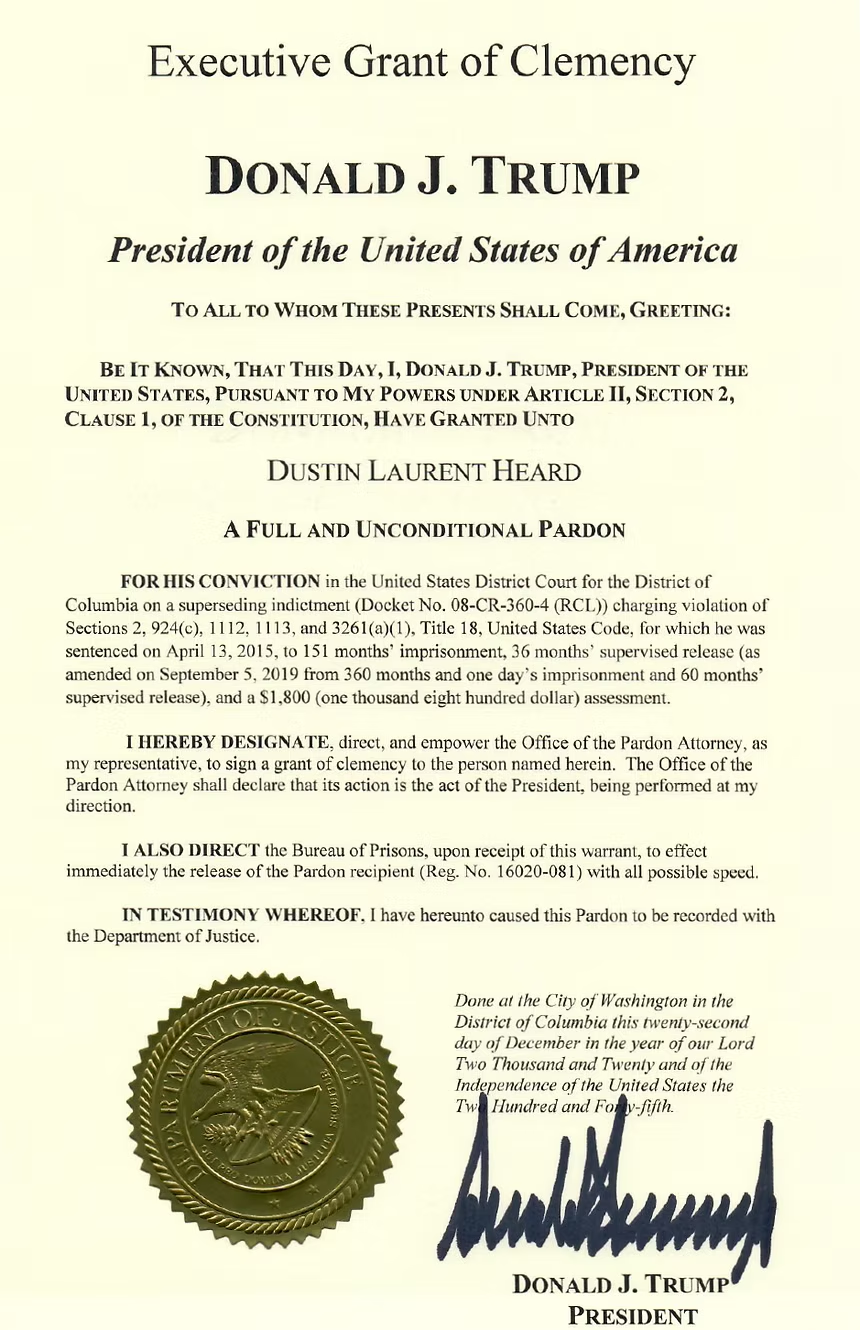
Presidential Pardon
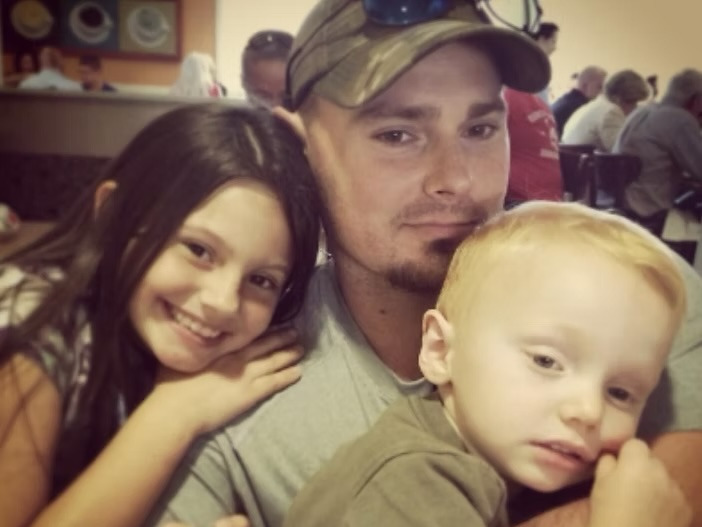

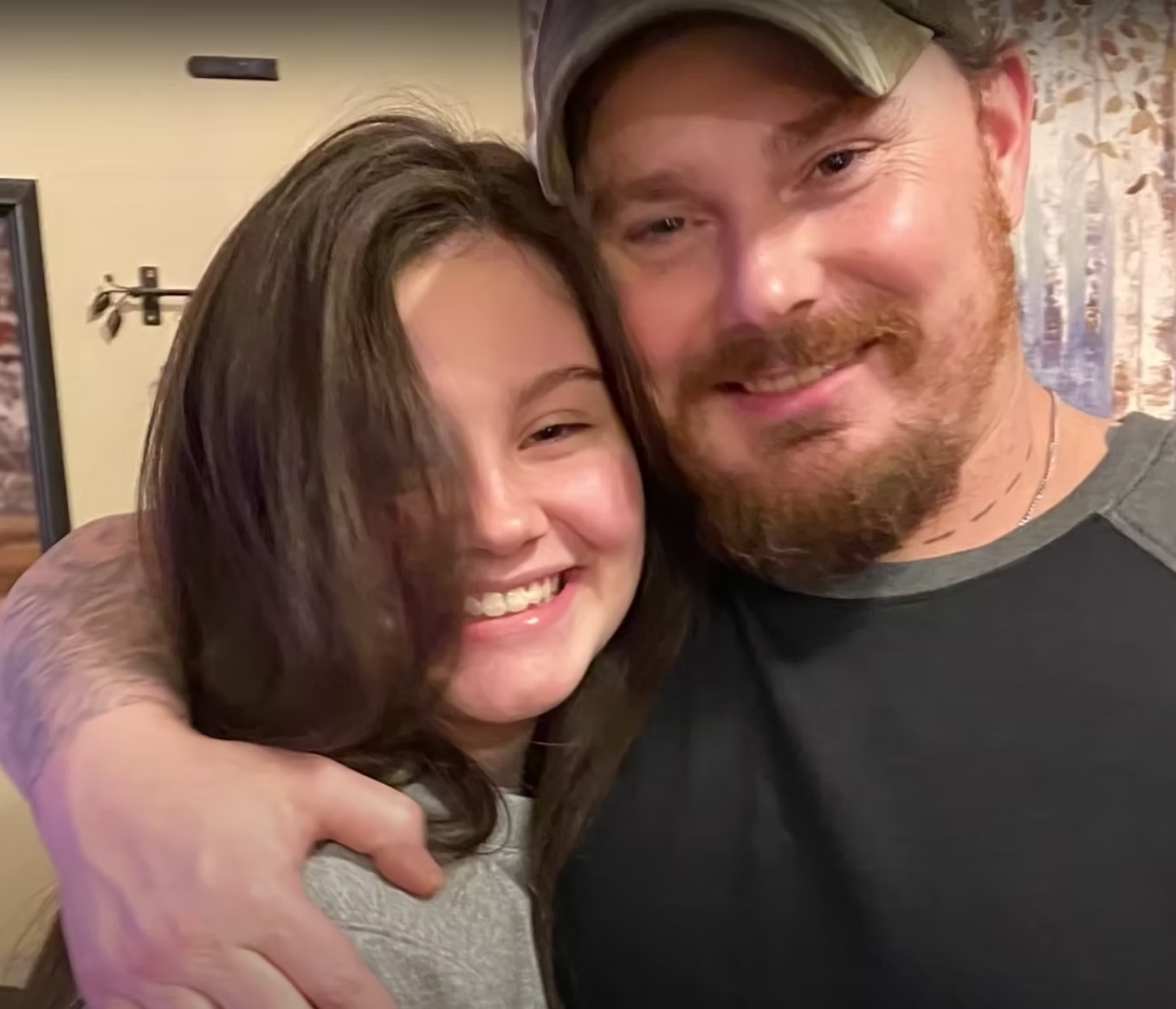
The right attorneys can be the difference between success and failure. Anywhere and everywhere we need to get the word out about your case, we do it. We are a legal team that creates the news, not just reacts to it.
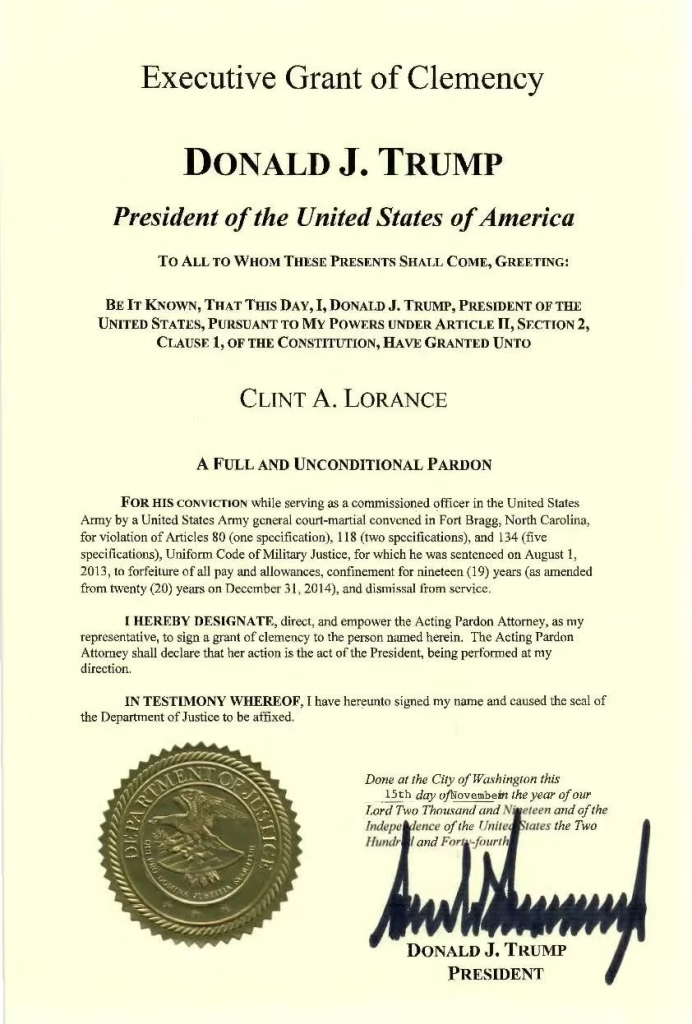
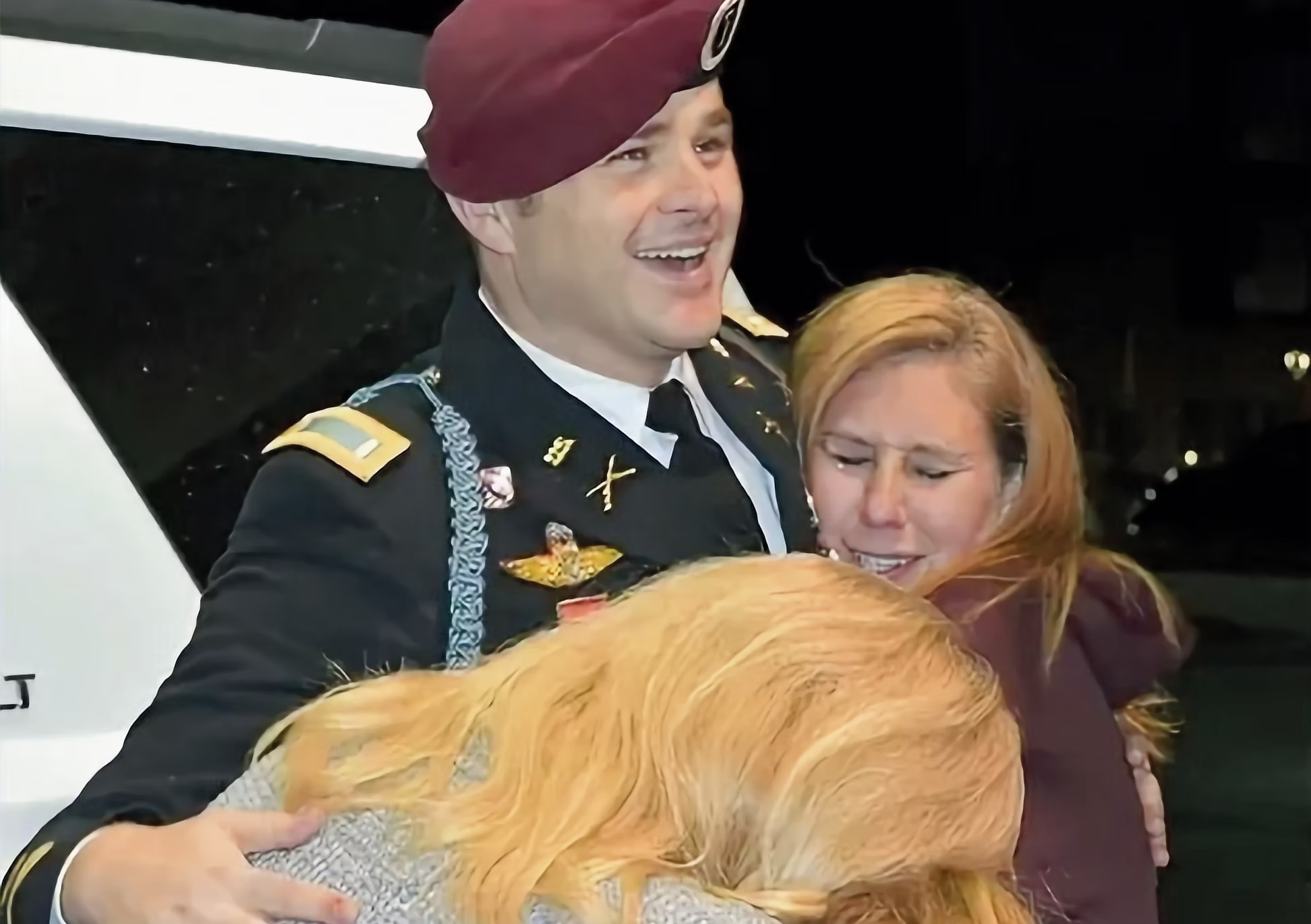
US Army 82nd Airborne Division First Lieutenant Clint Lorance after walking out of Leavenworth Prison after accepting a full & unconditional pardon from the President of the United States.
Presidential Pardon
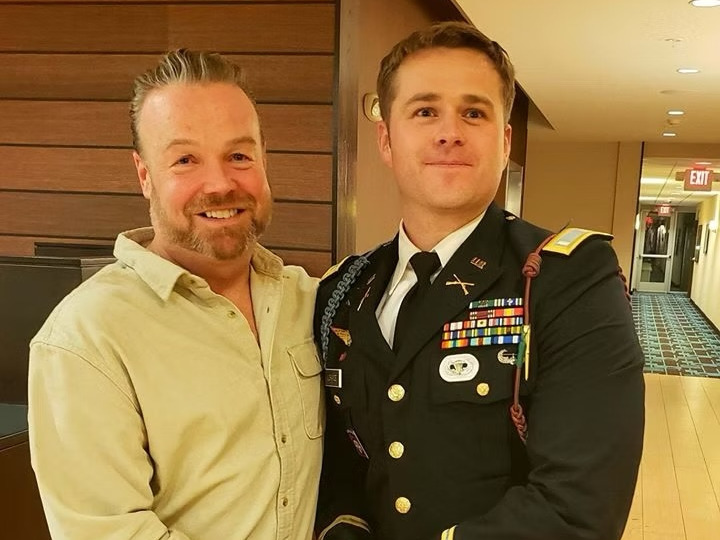
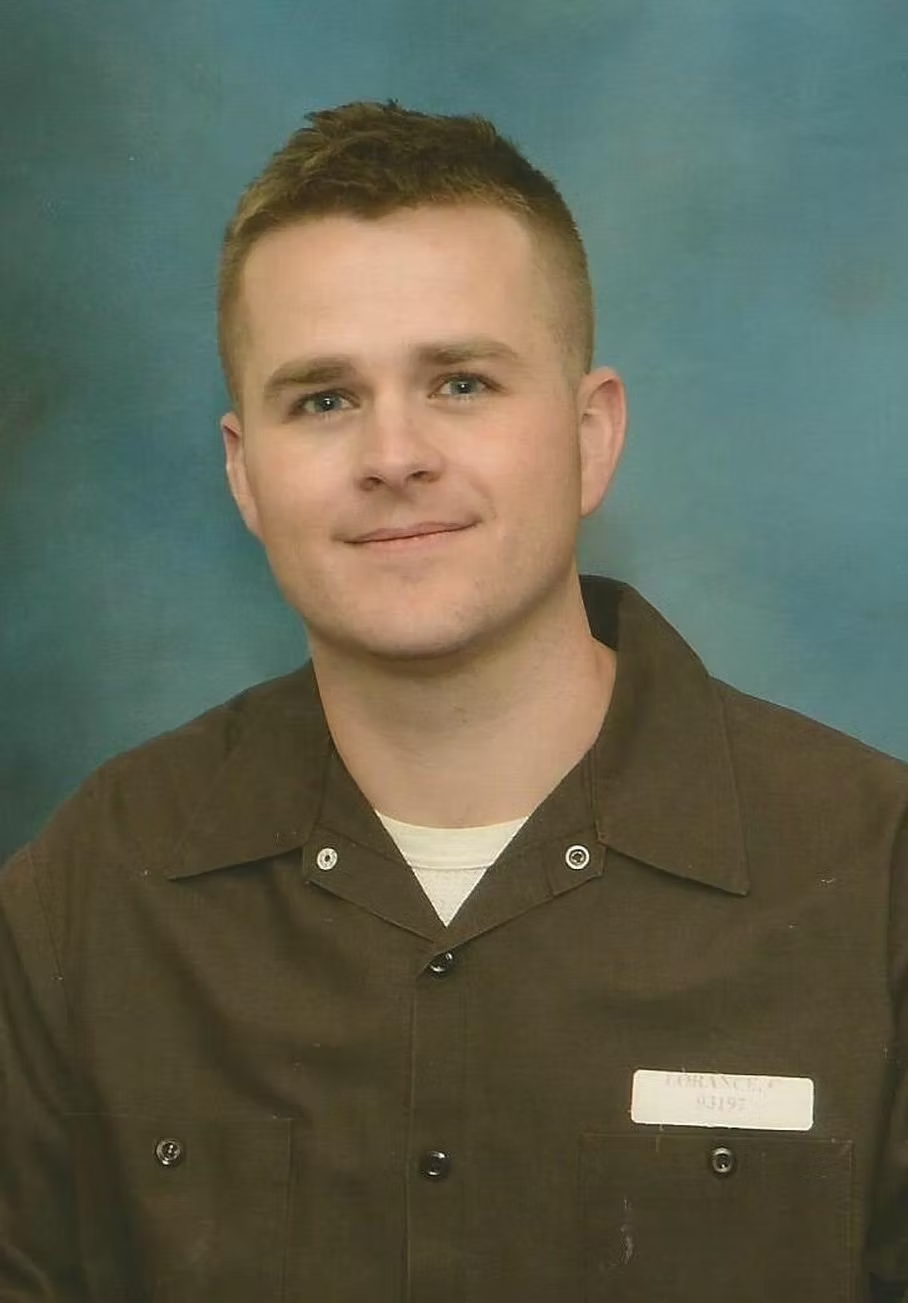
The right attorneys can be the difference between success and failure. Anywhere and everywhere we need to get the word out about your case, we do it. We are a legal team that creates the news, not just reacts to it.
Frequently Asked Questions
How long does an appeal take?
A military appeal usually has two phases, the Court of Criminal Appeals and the Court of Appeals for the Armed Forces. The process can take 1 – 2 years because each side reads the record of trial, investigates, researches the law, drafts appellate briefs, presents an oral argument, and then awaits the Court’s decision. There is not set timeframe for how long a Court has to decide an appeal.
Can the appeals court correct the mistakes of my trial?
Yes. The law authorizes the appellate courts to take any action necessary to ensure the findings and sentence are correct, up to an including setting aside convictions, reversing sentences, and restoring a servicemember to full status. This depends, however, on the facts and law involved in each case.
How is the appeal different from my trial?
There is no jury, no single judge, and no witnesses. Instead, each party files legal arguments called “briefs,” presents oral argument before a three-judge panel of appellate judges, then awaits the decision.
What is clemency before a Convening Authority?
Clemency is generally favorable action. The officer who referred your case to trial receives the result after trial and in many instances, to take favorable action, up to and including disapproving the findings and the sentence (except for cases involving sexual assault). This does not happen often, but it is an opportunity to seek favorable action based on errors at trial before the case goes to the appellate court.
What is the Army Court of Criminal Appeals?
This is the appeals court that reviews Army Courts-Martial from all over the world. Located on Fort Belvoir, Virginia, The Judge Advocate General of the Army, a three-star uniformed legal officer, appoints senior Judge Advocates to duty as appellate judges, who sit in panels of three to review the record of trial, consider briefs filed by the parties, host oral argument, and issue appellate decisions.
What is the US Court of Appeals for the Armed Forces?
This Court sites above the Courts of Criminal Appeals, like the Army Court of Criminal Appeals, and consists of 5 civilians appointed by the President and confirmed to 15-year terms. Located in Washington DC, the court has the discretion to hear an appeal and those it accepts must involve questions of law only, not of factual matters.
What is an appellate brief?
A legal argument where appellate counsel reviews the record of trial, identifies legal errors made during the investigation and trial, conducts legal research to apply the law to those errors, and argues to the appellate court that the client should receive favorable action.
Do i go before a jury?
No. Juries are for courts-martial or trials only. There are no juries authorized for an appeal.
If the military appeals are not successful, can I try Federal habeas corpus in civilian court?
Yes. The US Constitution contains a right to Habeas Corpus and military members must first go through the direct appeal process (Court of Criminal Appeals and Court of Appeals for the Armed Forces) and before they can file a Federal civil lawsuit under the Habeas Corpus statute challenging the constitutionality of their trial, convictions, or sentence.
Can my case go to the US Supreme Court?
Possibly. If the Court of Appeals for the Armed Forces accepts your case, you have the right to take your case to the Supreme Court directly through a petition for certiorari. The US Supreme Court has discretion whether to accept your case. If the Court of Appeals for the Armed Forces does not accept your case, then, you can file Habeas Corpus in civilian court and appeal again to the US Supreme Court.
Do the appeals courts have to grant us oral arguments?
No. There is no right to oral argument. Courts grant oral argument when it their discretion, they believe it will be helpful to resolution of the legal arguments raised in the written legal briefs.
When is my court martial final?
Generally, when your case passes through the Court of Criminal Appeals, the Court of Appeals for the Armed Forces, and the US Supreme Court denies to review your case.